
An induction cooktop uses an electromagnetic field to heat compatible cookware directly, while a gas stove uses an open flame to heat the utensil. Both are excellent cooking solutions, but the right choice depends on your kitchen, cooking habits and preferences.
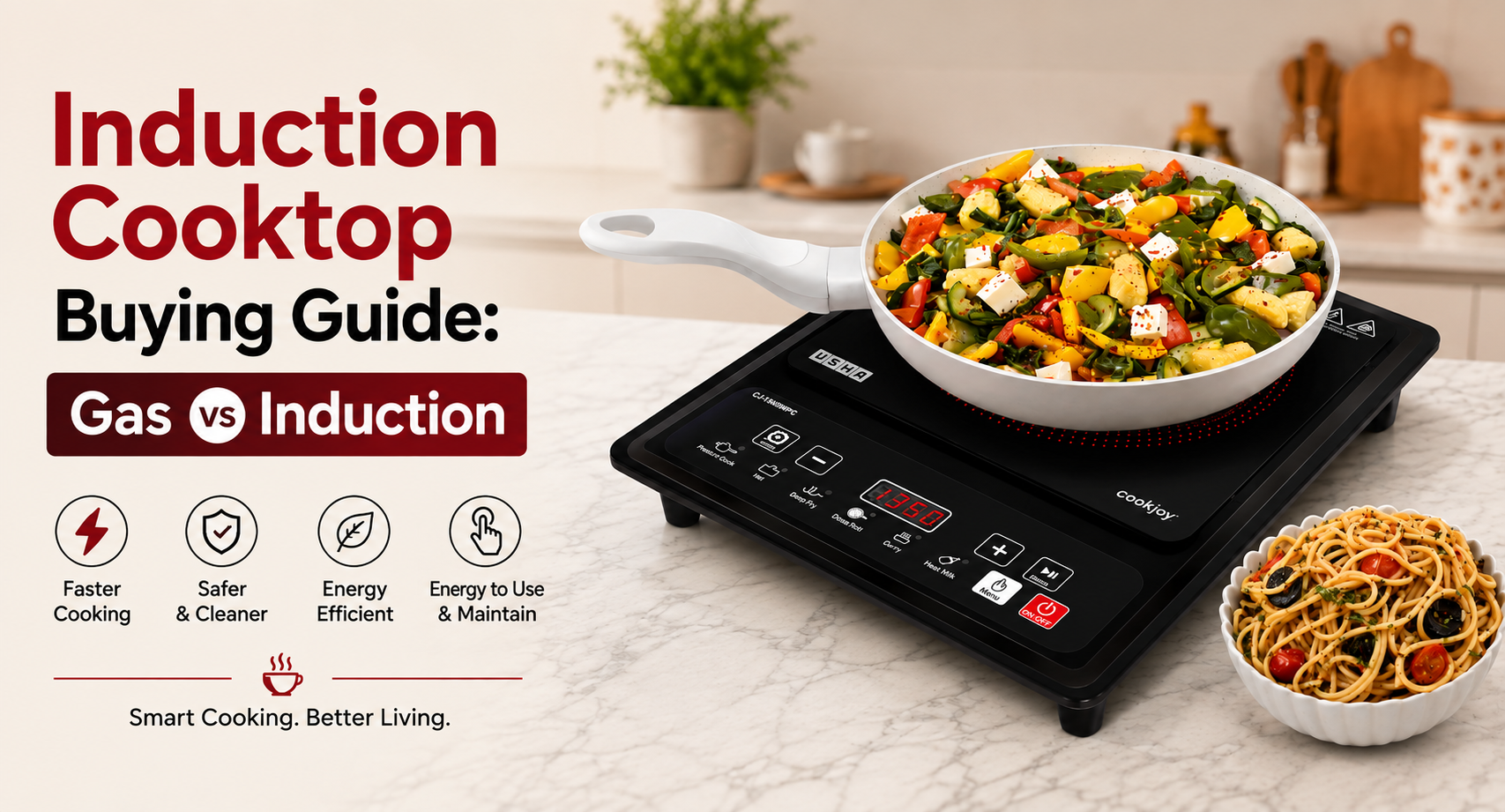
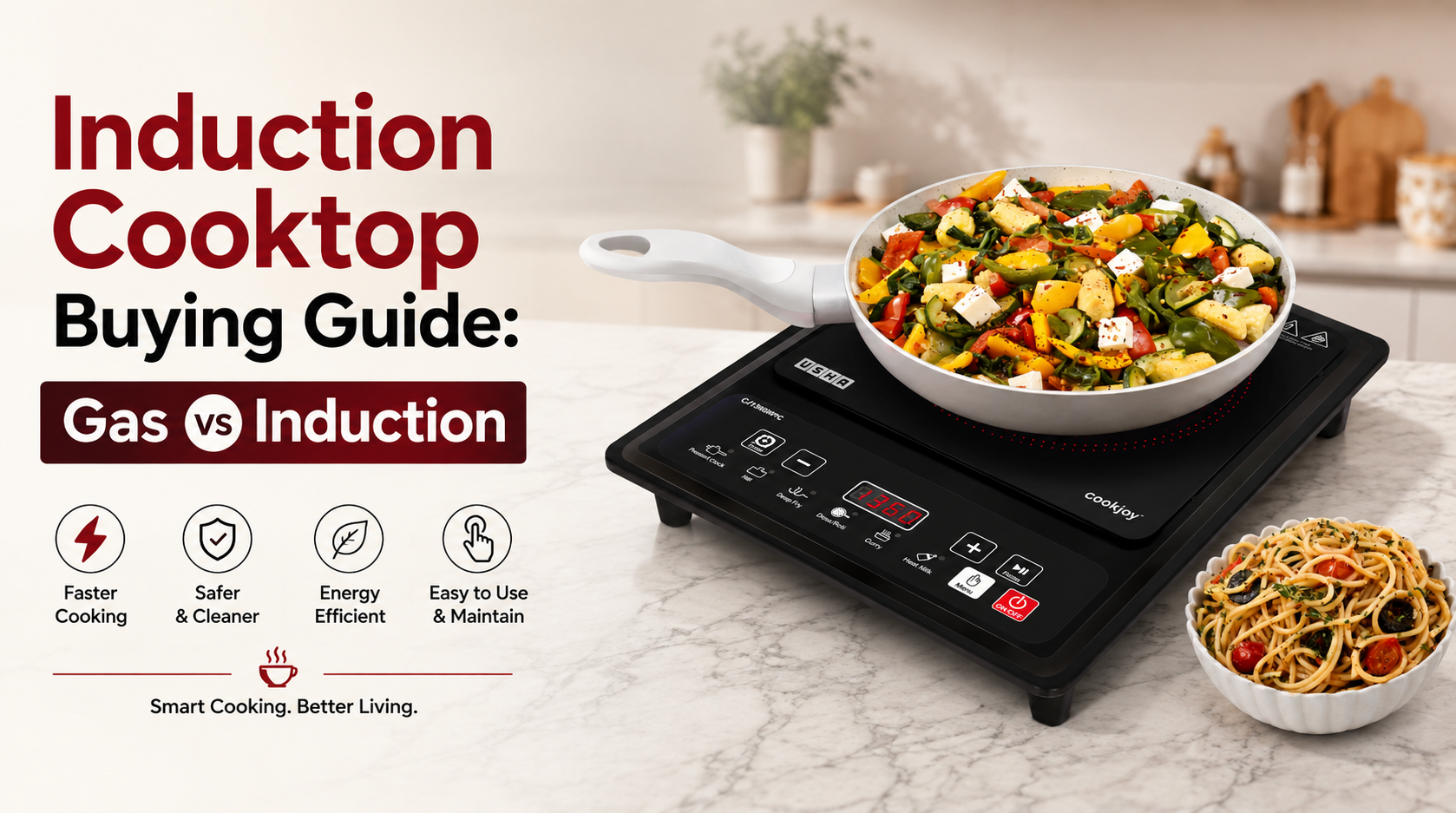
An induction cooktop uses an electromagnetic field to heat compatible cookware directly, while a gas stove uses an open flame to heat the utensil. Both are excellent cooking solutions, but the right choice depends on your kitchen, cooking habits and preferences.
Along with gas and induction, infrared cooktops offer another practical option by using radiant heat and working with almost any flat-bottom cookware.
Every kitchen has different cooking needs, and there is no one-size-fits-all solution. With Usha Cook's range of Gas Cooktops, Induction Cooktops and Infrared Cooktops, you can choose a cooktop that matches your cooking habits, available space and preferred cookware.
Let's find out which Usha cooktop is the right fit for your cooking habits, kitchen space and everyday needs.
Gas Stove vs Induction Cooktop - Key Differences at a Glance
Factor Gas Stove Induction Cooktop Heat-up speed Instant flame, moderate transfer to pan Very fast, heat generated directly in the cookware Energy efficiency Moderate due to heat loss Much higher; around 84-90% of energy reaches the food Safety Open flame, risk of gas leaks No open flame, cool cooktop surface, auto shut-off Running cost Depends on LPG/PNG prices Depends on electricity tariff, generally efficient Cookware compatibility Works with almost any pot or pan Needs a magnetic base such as iron or magnetic steelWhile this comparison answers the most common question, infrared cooktops provide a third option. They use electric radiant heating, do not require magnetic cookware and are ideal for households wanting an electric cooking solution without replacing existing utensils.
Cost, Safety and Convenience - Why More Households are Switching to Induction
Running cost is the first question most people ask when buying a cooktop. LPG prices vary by city and change often, so a fair, evergreen comparison is about efficiency rather than fixed cost. Since an induction stove wastes far less heat than an open flame, it generally uses less energy for the same meal, which can lower running cost over time.
Safety is where induction cooktops have an edge over gas stoves. There is no open flame, no risk of a gas leak and the surface around the pan stays relatively cool, a reassuring feature in homes with young children or elderly members. Usha induction cooktops also include pan-detection sensors that switch off automatically if no cookware is on the surface.
Convenience follows the same pattern. A flat glass top wipes clean in seconds, with no burner grates or spill trays to scrub. For small kitchens and apartments, an induction burner is often the simpler daily choice.
Explore Usha's Induction Cooktop range to compare models built around these features.
What Type of Cookware Works on Induction and What Doesn't?
Induction cooktops work only with cookware that has a magnetic base, typically cast iron, magnetic stainless steel, or induction-compatible pressure cookers. Aluminium, copper, glass, and most non-stick pans without a magnetic layer do not work on an electric induction cooktop.
Here is a simple way to check if your pots will work: hold a kitchen magnet against the base of your pan. If it sticks firmly, the pan will work on induction. If it does not stick, the cookware needs replacing, or you will need an induction plate adapter.
If you would rather not replace your cookware set, Usha Cook's Infrared Cooktops are worth considering, since they work with all types of utensils, including glass and ceramic.
Usha Cooktops by Use Case
- For single-burner cooking, a compact 1200-1360W model such as the Usha CJ1360WPC induction cooktop is a practical start, with preset menus and push-button controls suited to daily meals.
- If your cookware includes non-magnetic pots, a Usha Infrared Cooktop lets you cook without buying new vessels.
- For larger families, a 1600-2000W+ induction stove offers faster heat-up, while commercial induction cooktops suit continuous, high-output kitchens.
- If you are simply upgrading, a 2-, 3-, or 4-burner Usha gas stove remains a familiar option worth comparing against an induction top.
Gas vs Induction: Making the Right Choice
To make the right choice, consider features such as your cooking habits, volume, convenience and other factors.
If you prioritise fast, energy-efficient cooking and use induction-compatible cookware, an induction cooktop is an excellent choice. Prioritise features such as preset Indian menus, timer functions, power adjustment, child lock, pan sensor technology and automatic shut-off.
If you prefer a traditional cooking experience, a Usha Gas Cooktop with the right burner configuration is a good choice. But if you want an efficient cooktop that is compatible with all types of cookware, an infrared cooktop offers greater flexibility.
Finally, if you host often or run a small food business, a higher-wattage commercial induction cooktop handles continuous use better than a standard home unit.
Explore our complete range of induction, infrared, and gas cooktops designed for every cooking style and kitchen. Shop Usha Cooktops today!
Frequently Asked Questions (FAQs)
Which is better, LPG or induction?
Both have their advantages. Induction cooking is safer, easier to clean and more energy-efficient, with no open flame. LPG provides instant flame control, works with all types of cookware, and remains reliable during power outages.
What is the use of an induction stove?
An induction stove handles everyday tasks like boiling, frying, sautéing and simmering, heating cookware for an induction cooktop directly through electromagnetic energy for fast, controllable heat.
Which is better, induction or microwave?
They serve different purposes. An induction cooktop is ideal for stovetop cooking like curries, sautéing and boiling, while a microwave is mainly used for reheating, defrosting and quick heating.
Can we cook chapati on induction?
Yes, with an induction-compatible flat tawa made of cast iron or magnetic steel. Many Usha induction cooktops include a dedicated roti or dosa preset menu for this.
Is induction cheaper than gas?
Running costs depend on local LPG and electricity prices as well as cooking habits. Induction cooktops are much more energy efficient, while gas costs vary based on fuel prices.
What is the difference between an induction cooktop and an infrared cooktop?
An induction cooktop uses electromagnetic technology and requires magnetic-base cookware. An infrared cooktop uses radiant heat and works with most flat-bottom cookware.
Article Reviews
Fresh pasta, meanwhile, is…
Fresh pasta, meanwhile, is usually made from flour and eggs, and often a little olive oil and salt.
Fresh pasta, meanwhile, is…
Fresh pasta, meanwhile, is usually made from flour and eggs, and often a little olive oil and salt.
Fresh pasta, meanwhile, is…
Fresh pasta, meanwhile, is usually made from flour and eggs, and often a little olive oil and salt.
Fresh pasta, meanwhile, is…
Fresh pasta, meanwhile, is usually made from flour and eggs, and often a little olive oil and salt.
Add new comment